 Buy this domain
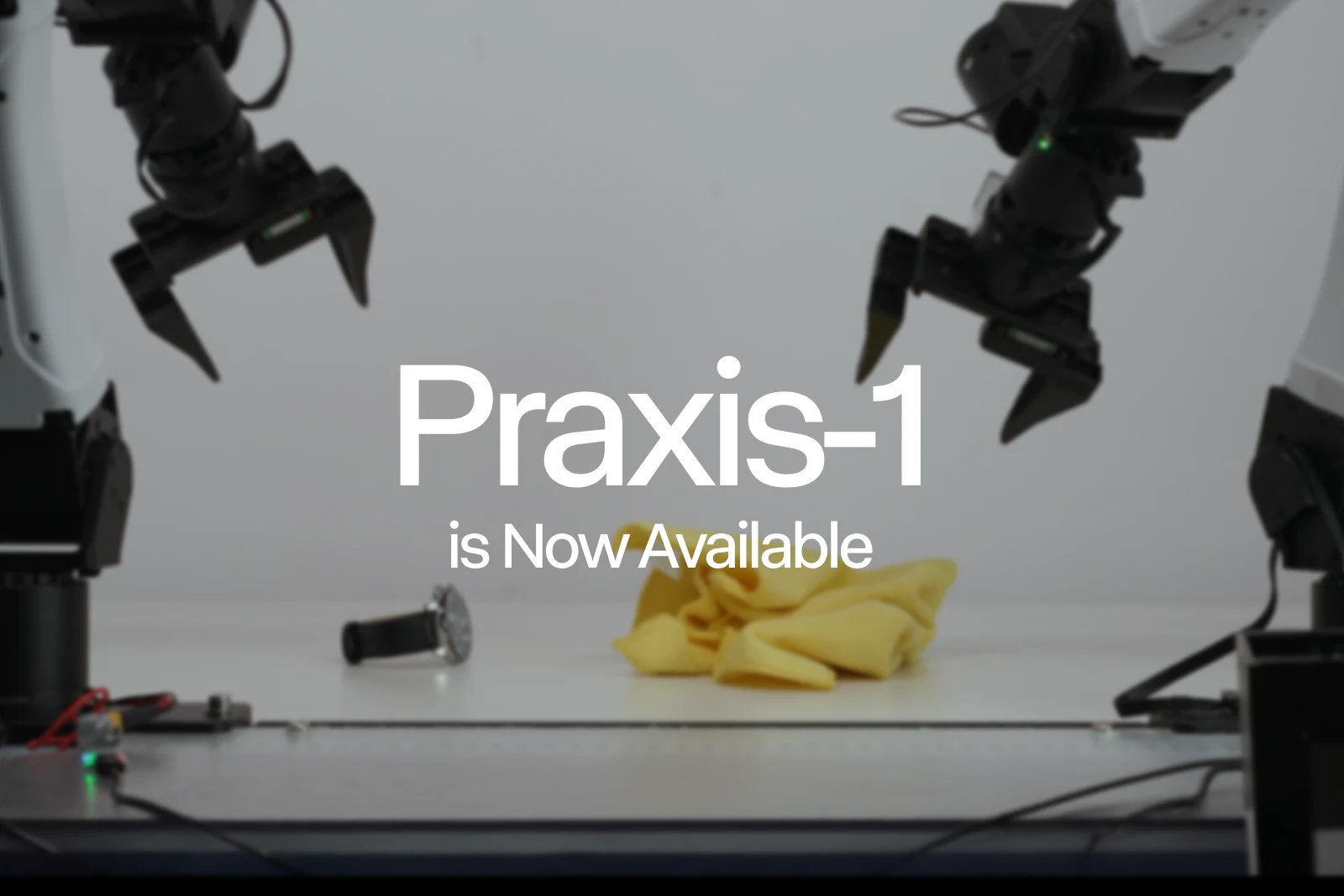
Runway released the weights and code for Praxis-1 on November 11, opening a robot-control model that had been limited to early partners. The Apache 2.0 release includes commercial use and code for adapting the model to other robots.
Noble Machines, an early partner, has been testing the model on a legged humanoid, Runway says. Standard Bots and Ultra have been using it on an industrial arm and a warehouse robot.
A model that predicts the scene and the movement
Praxis-1 takes camera images, the robot’s current pose and a written instruction. It predicts what the next part of the scene should look like and the movements needed to produce it. Runway’s technical report describes a 27-billion-parameter model that returns 1.6 seconds of actions at a time.
The approach builds on video pretraining, then adds robot-specific training. Downloading the weights does not remove the work of adapting a controller to a different body, camera arrangement or task.
Tabletop scores, not a humanoid work shift
Runway reports 46.2% success across 1,200 simulated episodes on NVIDIA’s RoboLab-120 benchmark, which tests tabletop tasks with a robot arm. It places Praxis-1 first among world action models and open robot foundation models on that board. Four entries still score higher overall, according to the same report.
In a separate test on a real Franka arm, Praxis-1 completed 88 of 100 episodes across ten tasks, compared with 80 for FLUX 3 Action. Those are results from the evaluation reported by Runway, not a measure of warehouse uptime or walking-humanoid reliability.
The release repository provides the code for running and fine-tuning the model. The public results give developers a starting point for reproducing the arm tests. A comparable account of the Noble Machines humanoid trials, with tasks, failure counts and operating time, would show how far the same model carries over to a robot that also has to walk.