 Buy this domain
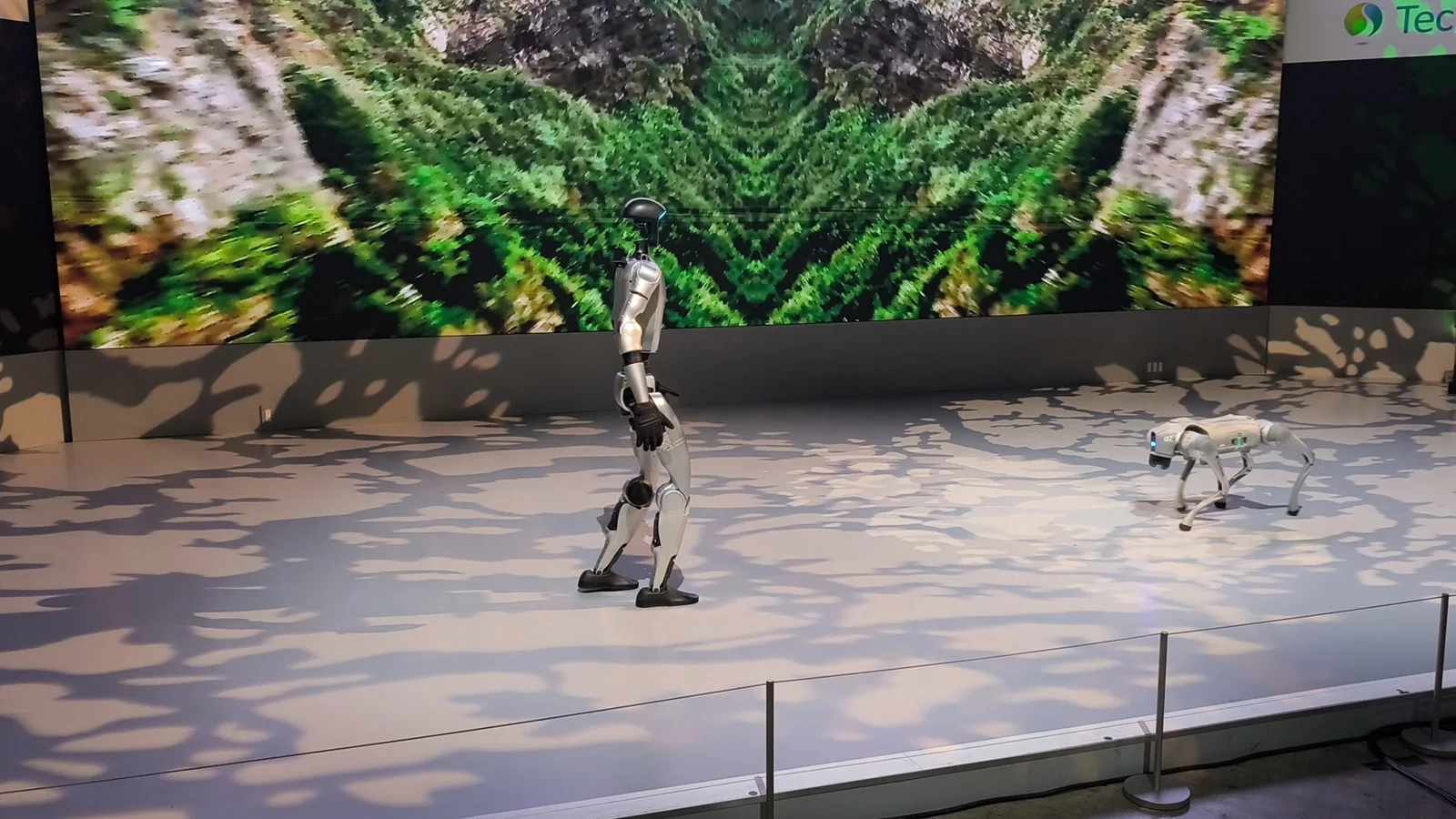
Japan Airlines’ ground-handling company announced a humanoid robot trial at Haneda Airport in April 2026, scheduled to start in May, beginning with one narrow part of the job: moving cargo containers from a dolly onto a high-lift loader, the vehicle that raises containers to an aircraft’s hold. JAL Ground Service (JGS) and GMO AI & Robotics (GMO AIR) announced the project on April 27 and demonstrated a robot at a briefing at JAL’s maintenance center at Haneda, according to Impress Watch and Aviation Wire.
Aviation Wire reports the companies call it the first trial of humanoid robots for airport work in Japan. The test program runs until 2028, with practical use targeted for 2029 or later. GMO AIR supplies the robots and develops their motion programs, and JGS sets operational requirements and evaluates safety.
The robots and the task
Two models are involved, both made in China: Unitree’s G1 and UBTECH’s Walker E. Aviation Wire lists the G1 at 130 centimeters, 35 kilograms and two hours of continuous operation, and the Walker E at 172 centimeters, 73 kilograms and three hours.
The first task is split into steps. Impress Watch, reporting from the briefing, says the robots will learn to operate a heavy lever, push a container, and turn the dolly by pressing a pedal. Each motion is to be developed on its own before the team combines them into one sequence, checks safety and moves to trials inside the airport. At the briefing, a G1 pushed a container.
The people running the project were cautious about timing. the JGS project lead said the site was at the starting stage and the robots would not be moving cargo as soon as testing began, with the next three years treated as a first development step, Impress Watch reported. A GMO AIR research engineer said the team would not aim for full autonomy at once and would start with balance control, using imitation learning and reinforcement learning.
Targets and a security question
The JGS president told reporters the goal is to replace work in some task areas by the end of fiscal 2028, Aviation Wire reported. JGS said it chose GMO AIR in part for reliability including security, consistent support and a rental-style dispatch service that gives access to the newest robots, according to Impress Watch.
Aviation Wire asked about the use of Chinese-made machines. GMO AIR’s president acknowledged the security concern, said few humanoids on the market work reliably, and said the project would start with Chinese robots but would at some point need to move to Japanese or other foreign machines whose safety and security had been verified.
The first public milestone should be the three individual motions working on real equipment, then a combined sequence. The useful report after that would give the number of container moves, the failure rate and the time a person needed to step in. The April announcement did not report those results.