 Buy this domain
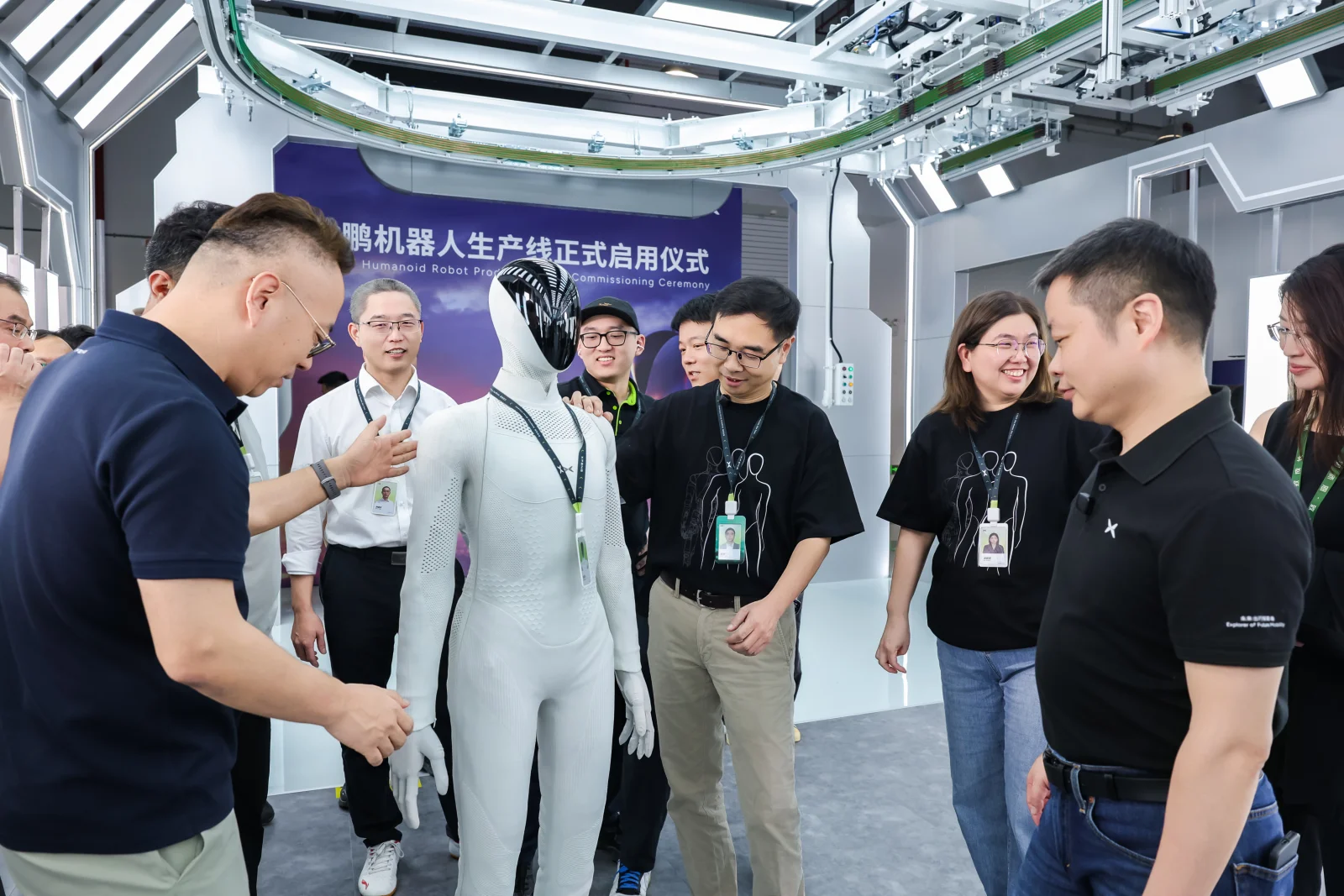
XPENG said on September 8 that its humanoid robot production lines are running and that the first IRON robot walked off the line under its own power. The carmaker calls the lines the world’s first automated production lines for advanced humanoid robots and says more than 80 percent of core processes are automated. It has not said how many robots the lines can build in a year.
The timetable that follows is the more useful part of the release. XPENG says its robots are scheduled to enter mass production by the end of 2026. The first commercial use will be in XPENG’s own stores and campuses. Market launch and deliveries in China and overseas are planned for 2027. For now, the first customer for IRON is XPENG.
“Today’s step is small, but XPENG is building the production lines for an entirely new product category.”
He Xiaopeng, XPENG chairman and CEO, in the September 8 release
What XPENG says IRON is
XPENG describes IRON as a general-purpose humanoid with 76 degrees of freedom across the body and 21 in each hand, wrapped in what it calls a fully enclosed flexible lattice structure. Three of XPENG’s own Turing AI chips supply up to 2,250 TOPS of computing, which the company says lets IRON run its physical AI foundation model on board and “autonomously perform complex tasks without remote operation.” None of those capabilities has been independently tested in public.
The money behind it
The release also restates a funding round. On August 24, XPENG’s robotics business agreed to raise more than US$900 million from multiple investors at a post-money valuation above US$6.3 billion. XPENG called it the largest single private round in China’s embodied AI industry to date. It also said it expects gross margin per robot to be “significantly higher” than for its electric cars, without giving a price or a margin figure.
How it compares
A production line and a robot that customers use are different milestones, and XPENG has reached the first. Unitree, whose G1 sells from US$13,500, reported in its IPO prospectus that it shipped more than 5,500 humanoid robots in 2025, according to China Daily. Unitree’s figure counts robots shipped. XPENG’s are plans.
XPENG is also one of the cross-sector entrants China’s economic planner had in mind in November 2025, when it said more than half of the country’s 150-plus humanoid companies were startups or newcomers from other industries and warned of a glut of look-alike products.
The first test is the year-end mass production date. After that, XPENG should be able to say how many IRON units are working in its stores and campuses and what they do there. A 2027 price and a delivery count for outside buyers would show whether the line is building a product or a demonstration.