 Buy this domain
Opinion.
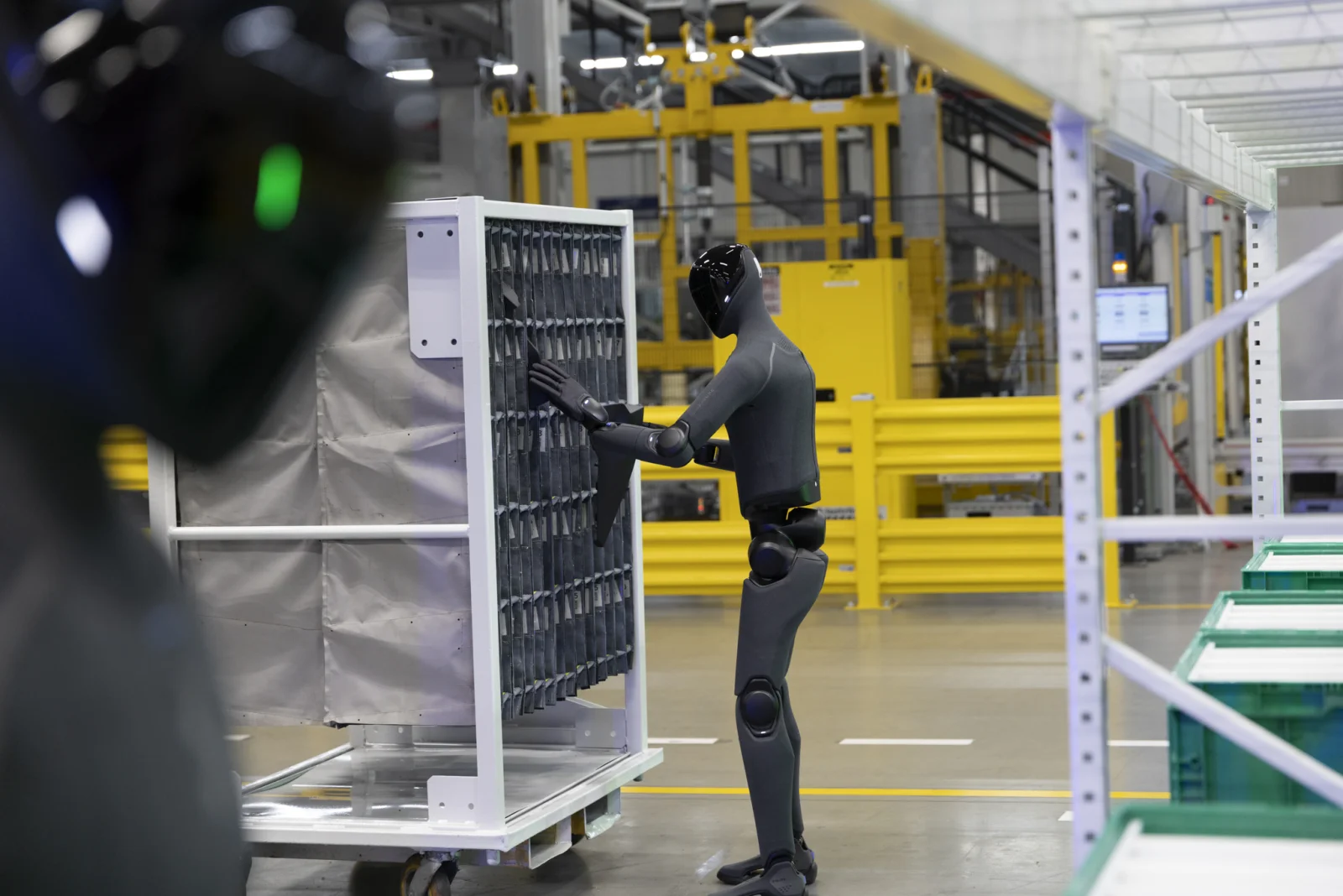
A robot carrying a box is easy to film. A robot that has stopped with a tote half over a conveyor is harder to explain, and it is the scene I would want to see before buying one. Someone has to decide whether the load is secure, whether the space is clear and whether the conveyor should stop too. Then someone has to decide when work resumes.
What Agility and FORT announced
On October 1, Agility Robotics and FORT Robotics signed a memorandum of understanding covering safety infrastructure for Digit 5. Agility describes a three-part architecture: a safety pendant, on-robot communications, and off-robot interfaces that connect Digit to external safety systems. The new piece, an “Offboard Safety Bridge” developed jointly, is meant to extend the robot’s safety approach to equipment around it. The companies also plan joint hardware development, solutions engineering, regulatory compliance work and deployment support.
The pendant has a specific job. Agility says Digit 5 will run autonomously during normal work, and the pendant will let customers monitor it and provide “a redundant manual override for safety purposes during setup, maintenance, or in the event of an unexpected situation.” It is a memorandum, not a finished product or a certification.
Agility CTO Pras Velagapudi said the bridge is about “building safety infrastructure that works whether the input is coming from onboard the robot, or from the environment around it.”
Stopping is half the problem
The off-robot link matters because a stop rarely affects only the robot. A humanoid that halts correctly can still leave a process in a bad state: a load in its hands, a queue building behind it, a worker waiting for the next item. That is a hypothetical, not a reported Digit incident, but it is the situation an orderly restart procedure has to handle.
OSHA’s technical manual on industrial robots supports the worry. It notes that studies in Sweden and Japan found many robot accidents happen not in normal operation but during installation, testing, programming and maintenance. It also warns that when workers feel rushed to resume operations, “critical safety functions can be overlooked.”
What I would ask a vendor
- Which events stop the robot, and which also stop connected equipment?
- After a stop, who checks the load, the area and the task state before restarting?
- Can the customer find out why the stop happened without calling the vendor?
- Can an operator who did not attend the demo recover the task using only the written procedure?
These are evaluation questions, not safety design advice. A qualified integrator still has to assess the specific robot, task and facility.
Digit 5 reaches early customers in the first half of 2027, according to Agility. The useful evidence will be recovery data from those sites: how often the robot stops, how long restarts take and who performs them. A smoother demo video will not answer those questions.